



Tax Refund Vacuum
By: Atty. Irwin C. Nidea, Jr.
"Not all tax overpayments are considered “erroneous or illegal” payments that may be refunded under the Tax Code. While other remedies may be available, that is a discussion for another time. So, if you apply for a compromise and pay the amount in advance, you should not expect a refund if the application is denied. If you are VAT zero-rated, it is best to insist that your suppliers respect the incentives granted to you by law, rather than simply absorbing the VAT they pass on. And if you make advance tax payments to the government, these likewise cannot be recovered under the Tax Code refund provisions, as they are not treated as erroneous or illegal."
 Irwin C. Nidea Jr. +632 8403-2001 loc.330 |
There are only two ways by which a tax may be refunded under the Tax Code:
1. Value-Added Tax (VAT) attributable to zero-rated sales, under Section 112; and
2. All other types of tax, under Section 229.
For a claim under the latter, the tax paid must fall within the strict definition of an “illegal or erroneous tax.” In practice, however, both the BIR and the courts have applied this definition quite narrowly, often leaving taxpayers without a remedy to recover taxes that the BIR was never entitled to collect in the first place.
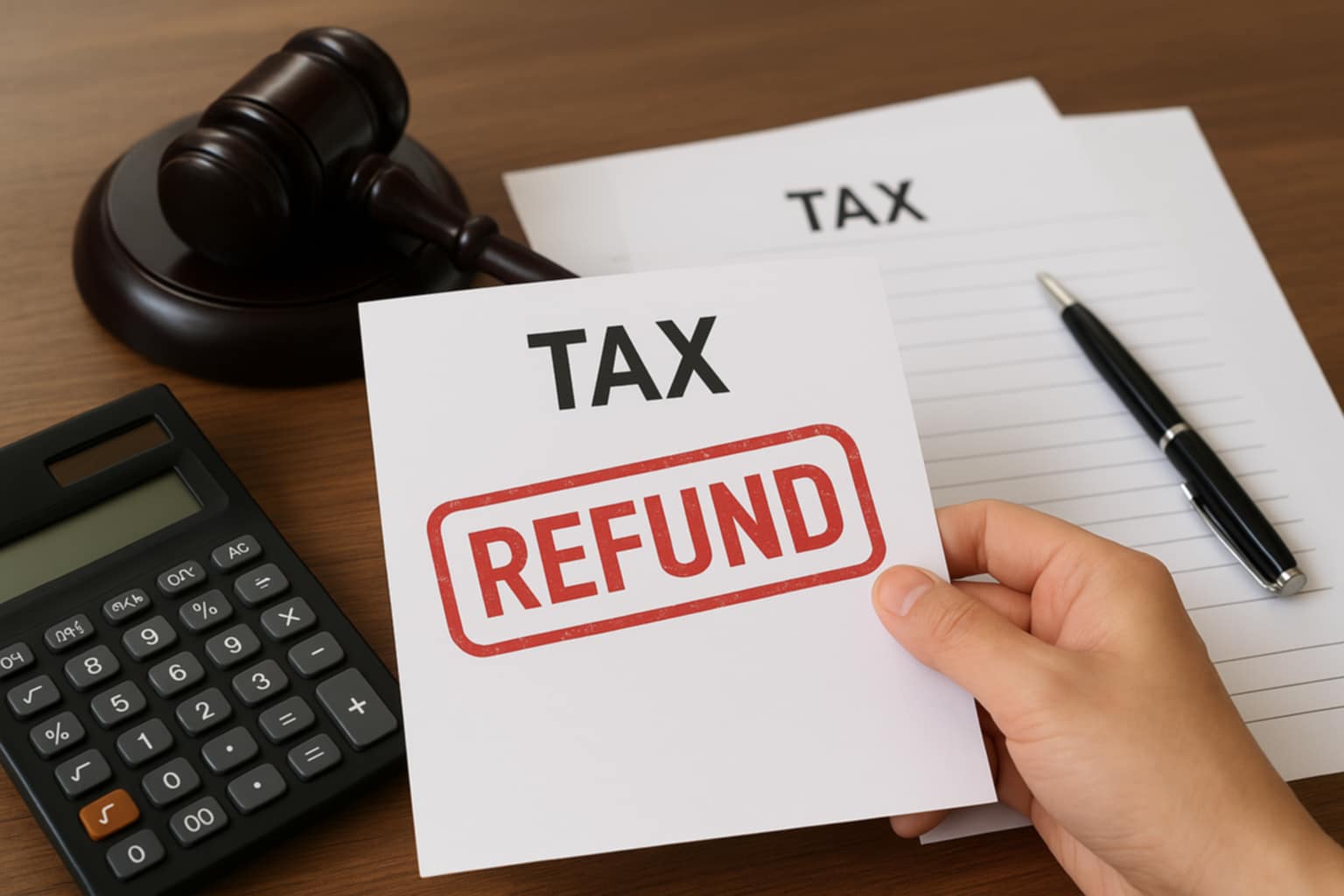
There are some instances however, that overpayments don't meet the strict legal definitions of "illegal" or "erroneous." Here are some scenarios where a refund claim under Section 229 will likely be denied:
1. Payments Made Under Compromise Agreements
When a taxpayer offers a compromise to settle a tax liability, the BIR requires the payment to be made upfront. Revenue Regulations governing compromise agreements explicitly provide that if the compromise is disapproved, the amount paid will not be refunded. Instead, it will be applied against the taxpayer’s outstanding tax liabilities. Such payments are treated as voluntary and conditional—made in good faith to facilitate settlement, not as “illegal or erroneous” payments.
But what if the courts later rule in favor of the taxpayer and cancel the very assessment that was the subject of the denied compromise? Since no liability remains against which the advance payment can be applied, what happens to the money already paid?
The Supreme Court has addressed a related situation in the Union Bank of the Philippines (UBP) case. UBP filed applications for administrative abatement to settle deficiency tax assessments. The BIR, however, neither accepted nor acted upon these applications. UBP then filed a claim for refund of the amounts it had paid. The BIR argued that the payments formed part of staggered payments under the abatement program. The Supreme Court disagreed, ruling that UBP’s payments could not be treated as installments on abated taxes.
The Court explained that taxes initially collected legally may still be refunded if a supervening event later renders them refundable. Under Section 229 of the Tax Code, this principle applied to UBP: while the payments were initially valid as part of its abatement applications, the BIR’s non-acceptance of those applications constituted a supervening cause. As a result, UBP became entitled to a refund of the amounts it had paid.
Will the SC apply the same principle in denied compromise applications?
2. VAT absorbed by a Zero-Rated Entity
The Coral Bay case, and more recently the Melco case, illustrate the difficult position of entities that are charged VAT despite their VAT zero-rated status. This situation is common among companies registered with Investment Promotion Agencies (IPAs) and renewable energy developers. While these entities should not be burdened with VAT, their suppliers sometimes nonetheless impose it.
If the VAT is passed on and paid, the taxpayer cannot recover it from the government—even if the amount has already been remitted. In Coral Bay, the Court clarified that the only recourse of the taxpayer is to pursue a collection case against its suppliers. In the recent case of Melco, the Supreme Court held that such payments form part of the purchase price and are therefore not refundable.
Still, it must be emphasized that this leads to unjust enrichment on the part of the government. Equity suggests that the amounts should, in some manner, be returned.
3. Advance Tax Payments
In the PNB Case, the subject of the recovery is the advance income tax payment of PNB for the bank’s 1991 operations in response to then-President Corazon C. Aquino’s call to generate more revenues for national development. According to the court, the advance income tax payment made by the bank is not in the nature of erroneously or illegally collected tax. The advance income tax payment was not pursuant to any law or regulation requiring such advance payment but simply out of its volition to heed the call of then-President Corazon C. Aquino.
Not all tax overpayments are considered “erroneous or illegal” payments that may be refunded under the Tax Code. While other remedies may be available, that is a discussion for another time. So, if you apply for a compromise and pay the amount in advance, you should not expect a refund if the application is denied. If you are VAT zero-rated, it is best to insist that your suppliers respect the incentives granted to you by law, rather than simply absorbing the VAT they pass on. And if you make advance tax payments to the government, these likewise cannot be recovered under the Tax Code refund provisions, as they are not treated as erroneous or illegal.
In the end, the process reflects a familiar truth: once the government has your money, getting it back can feel like trying to hold back a flood—beyond your control.
The author is a senior partner of Du-Baladad and Associates Law Offices.
The article is for general information only and is not intended, nor should be construed as a substitute for tax, legal or financial advice on any specific matter. Applicability of this article to any actual or particular tax or legal issue should be supported therefore by a professional study or advice. If you have any comments or questions concerning the article, you may e-mail the author at This email address is being protected from spambots. You need JavaScript enabled to view it. or call 8403-2001 local 330.