



The Role of Technology in Tax Compliance
By: Atty. Jomel N. Manaig
Unfortunately, the Philippines, tech-savvy as we are, still has a long way to go to realize the potential of current and emerging technology. We predominantly still cling to the tried and tested, but ultimately less technologically advanced, way of doing things. It does not mean, however, that we are antagonistic towards technology. It just means that we are not getting there as fast as one would hope.
 Atty. Jomel N. Manaig +632 8403-2001 loc. 140 |
This November marked the 2025 Andersen Global Partner Meeting. As part of Andersen Global, we joined the meeting to collaborate and exchange ideas involving the developing landscape of taxation, among others. A great deal of focus and attention was devoted to surveying and showcasing the opportunities and imminent impact of technology to the world of taxation.
Unfortunately, the Philippines, tech-savvy as we are, still has a long way to go to realize the potential of current and emerging technology. We predominantly still cling to the tried and tested, but ultimately less technologically advanced, way of doing things. It does not mean, however, that we are antagonistic towards technology. It just means that we are not getting there as fast as one would hope.
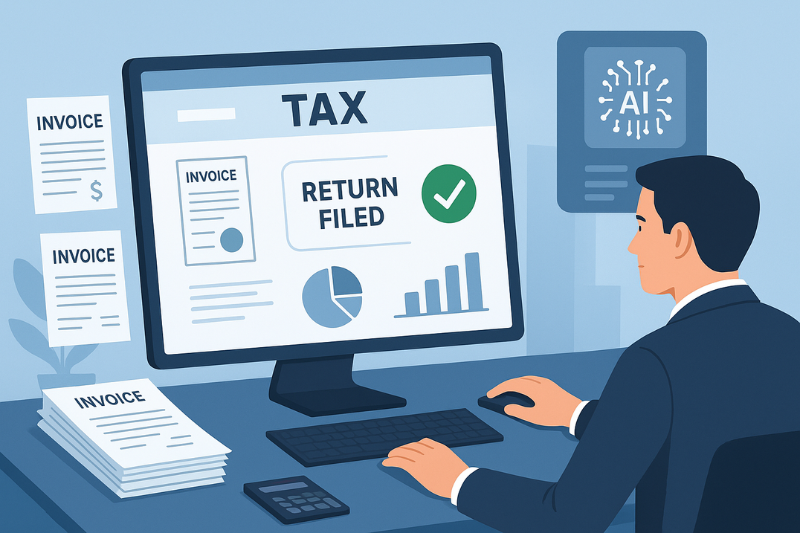
So while we may not be there yet, Philippine taxpayers may already start pondering on how to leverage technology to make their lives better. Here are a few things that may be considered:
Data Collection and Encoding. Paper documents have been the go-to source of information since time immemorial. We then end up having to manually encode the information from these paper documents in order for these to be used for tax compliance purposes.
Fortunately, we now have tools to allow seamless data collection and encoding. E-invoicing software now gives taxpayers an opportunity to do away with paper documents and allow instantaneous collection of granular data from each transaction. In case paper documents are unavoidable, programs are now available that allow scanners to read written words and numbers and encode them into ones and zeros.
Having precise and detailed data on hand and in a usable format would greatly benefit taxpayers. Easily collected and accurate data decreases the risk of erroneous tax reporting and enables businesses to correctly assess the tax impact of its transactions and decisions.
Automation. Ever get tired of the myriad of tax returns that you have to file day in and day out? Ever experienced filing an inaccurate tax return and being assessed for it? Automation may hold the key to prevent all of these.
Not to be confused with artificial intelligence, automation in tax compliance makes use of technology to streamline and administer tax-related processes. Automation is applied on predefined and repetitive or recurring tax compliance work, such as periodic filing of tax returns.
By automating tax-related processes, the shortcomings of manual activity and human error are significantly reduced. Automation also promotes greater efficiency and accuracy and enables tax professionals to focus on more important and higher valued work.
Artificial Intelligence. While the benefits of automation are best felt on repetitive tax work, artificial intelligence (AI) applies to more complex tax areas like tax analysis and planning, identification of potential tax exposures, and exploration of tax solutions and efficiencies.
All these benefits are due to one crucial ability of AI: to make sense of large tax data. It may be through machine learning, generative AI, or even advanced data algorithms. However, AI is not the end-all and be-all of tax compliance. AI is still far from perfect and, at least at this point, is still considered as a tool to help tax professionals.
Technology is a tool to help us do our tasks faster and better and these tools are already here. How are we taking advantage of them?
The author is a Partner of Du-Baladad and Associates Law Offices (BDB Law).
The article is for general information only and is not intended, nor should be construed as a substitute for tax, legal or financial advice on any specific matter. Applicability of this article to any actual or particular tax or legal issue should be supported therefore by a professional study or advice. If you have any comments or questions concerning the article, you may e-mail the author at This email address is being protected from spambots. You need JavaScript enabled to view it. or call 8403-2001 local 140.